Wednesday, March 3, 2010

Blocking Sunlight for Daytime Sleepers

Q: My new job requires me to work nights which means I have to sleep during the day. Can you recommend shades or blinds that could block out sunlight altogether?

A: Certain kinds of roller shades, cellular blinds, and roman shades are specifically designed to eliminate daylight. Room darkening cellular shades might be perfect because, in addition to blocking the sun, they provide insulation against both heat and noise.

If your looking for something a little simpler, however, you may want to look into vinyl roller shades. These low profile shades are easy to install and even easier to use.

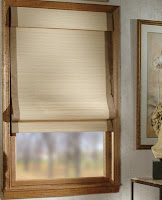
Roman shades have also been popular as room-darkening shades. They're available in a wide range of fabrics so you have the option of choosing a darker or heavier fabric to block light. They also come with optional liners to help eliminate unwanted light and their soft folds are perfect for creating a warm ambiance in any bedroom.


Thursday, February 18, 2010

Moveable Arch Shades

Q: I just bought a home that has decorative arch windows in the living and dining rooms and need something that can be raised or lowered depending on lighting. I've seen wooden slatted ones, but I'm looking for something that can let in even more light. Any suggestions?

A: Cellular shades come in all kinds of shapes and sizes and, although you can get them as stationary shades, you can also order movable ones. While most fabric and cellular arch shades resemble fan shapes, the movable shades by Hunter Douglas actually have cells that run parallel to the window sill. While this certainly helps them function as movable arch shades, it also give them the aesthetic appeal of matching the other shades in your room.

And, speaking of matching, if you decide to go with the cellular window shades for your arches, you can choose colors and textures that match other Hunter Douglas shades. This means that you can coordinate your movable arch shade to the other shades in your room, too!

Tuesday, February 2, 2010

Options in Skylight Shades

Q: What types of shades are available for skylights? And what options do I have for controlling my skylight shades?

A: Most skylight shades are actually cellular shades. When designed for skylights, these insulating shades usually come as a single-cell shades (a single layer of air pockets – or cells – that expand when the shade is closed). You can choose either light diffusing or room darkening shades depending on your lighting needs. And, conveniently, skylight shades come in a wide range of colors so you can either match your existing window treatments or the color of your ceiling for a seamless look.

As for controls, window blind manufacturers offer two types of skylight blind controls: manual and motorized. Manual operation usually involves a long specialized pole (available from the manufacturer) that allows you to easily reach and adjust your skylight shade. However, if your skylight is very high or you simply want an easier operating solution, you might want to consider a remote controlled shade. Just imagine, perfect light with a push of a button!

Wednesday, January 20, 2010

Easy Maintenance Blinds and Shades

Q: What kind of blind can you get that you don’t have to dust? Or, better yet, is there a maintenance-free blind?

A: Although all blinds require some maintenance, roman shades and roller shades often offer the best options for easy cleaning.

Roman shades are essentially drapes that work like shades and blinds. These unique window coverings can collect some dust, but they’re much easier to clean and maintain than your average slatted blinds.

Your best bet, however, is probably roller shades. These flat pieces of fabric or vinyl are easy and quick to wipe down and keep clean on a regular basis. They’re also very durable and are great for homes with high traffic and lots of activity. Simply pull down the shades and wipe them clean. And, since roller shades come in a wide variety of colors and textures, these simplistic shades may be your best option to complete your home.

Tuesday, January 5, 2010

Enjoying the View AND the Sun

Q: I just bought a house with an incredible view out the front windows. I love it, but I'd like a little more privacy during the day while still being able to enjoy those gorgeous mountains! What kind of shade can I get that lets me have both?

A: You'll probably want to invest in sheer shades. Sheer shades, also known as solar shades, are designed to maximize control over light while still allowing homeowners to enjoy the view. These gorgeous shades decrease direct sunlight while simultaneously providing a degree of privacy during the day.

Solar shades and sheer shades are created with “openness” factors that allow a certain percentage of sunlight to come through. Large openness factors (usually between 14% and 15%) give you maximum view and maximum light. While these are great for huge private yards, they may not be the best choice for street-facing windows or ones where direct sunlight can be a problem.

Since solar shades come in a wide range of weaves (between 15% openness and 3% openness) you have a lot of choice in daytime privacy, sun control, and preservation of the view. And, if you need more privacy at night, these compact shades can easily be combined with drapes or other blinds.

Enjoy those mountains!

Tuesday, December 22, 2009

Contemporary Vertical Alternatives

Q: I've heard that there are alternatives available to typical vertical shades and I'd like to know more about them. I'm hoping to find something other than conventional vertical blinds since my home is more contemporary. Can you help?

A: Of course! The most popular vertical blind alternatives are composed of cellular shades. Vertical cellular shades are comprised of pleated sheets rather than traditional vanes and provide a more contemporary and modern look to large windows and sliding glass doors. And vertical cellular shades come in a variety of colors and opacities which gives you even more control over the light in your home.

Much like traditional cellular shades (or honeycomb shades as they're sometimes called), vertical cellulars are made of rows of air pockets that expand as you pull the shade closed. These unique pockets, or cells, create an insulating layer between your home and the window, providing an energy efficient yet contemporary look to your windows.

Tuesday, December 8, 2009

Options for Light Filtering

Q: I have wonderful windows in the front of my house that really let in a lot of light. I love the light, but my windows face the street and I'm hoping to improve my privacy with some window treatments. Do you have any suggestions for shades that let me keep the light but also shield me from the street?

A: You're in luck! There are lots of options for light filtering shades! Roman shades, roller shades, and cellular shades (probably the most popular) all come with light filtering options. If you love the look of drapes but like the convenience of shades, you may want to consider Roman shades. If your style is more contemporary or you want a low-profile window treatment, you might like roller shades (Forget the vinyl, modern roller shades come in all sorts of soft fabrics and colors).

Cellular shades, also known as honeycomb shades, are probably one of the most popular choices for light filtering shades. These unique shades have pockets of air that help insulate your window in addition to diffusing sunlight. Like roller shades and roman shades, cellular shades also come in room darkening colors and textures.

Light filtering means that you keep the soft natural sunlight but gain privacy at the same time. Keep in mind, though, that some of these shades will show your shadows at night so you may want to either consider a 2-in-one shade with room darkening benefits, or combine your light filtering shade with a drape or window treatment you can close at night.